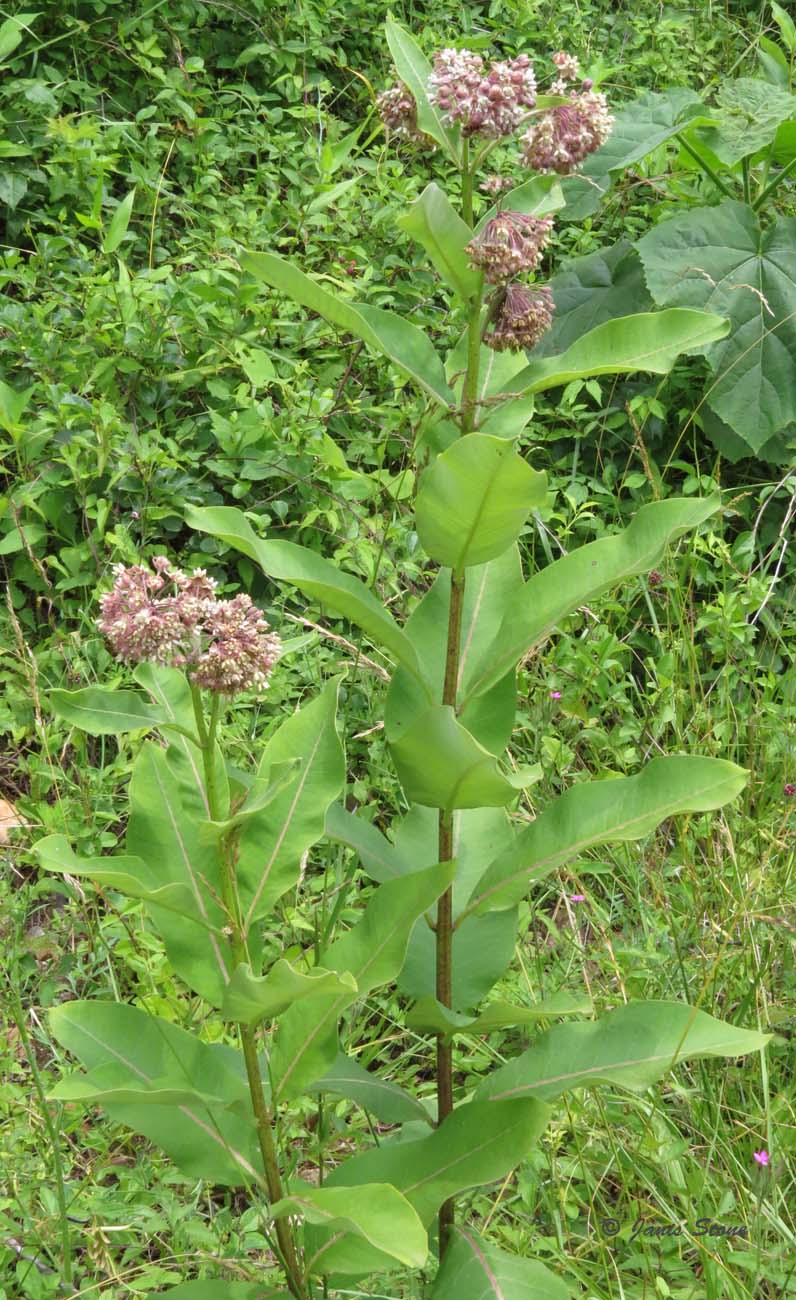
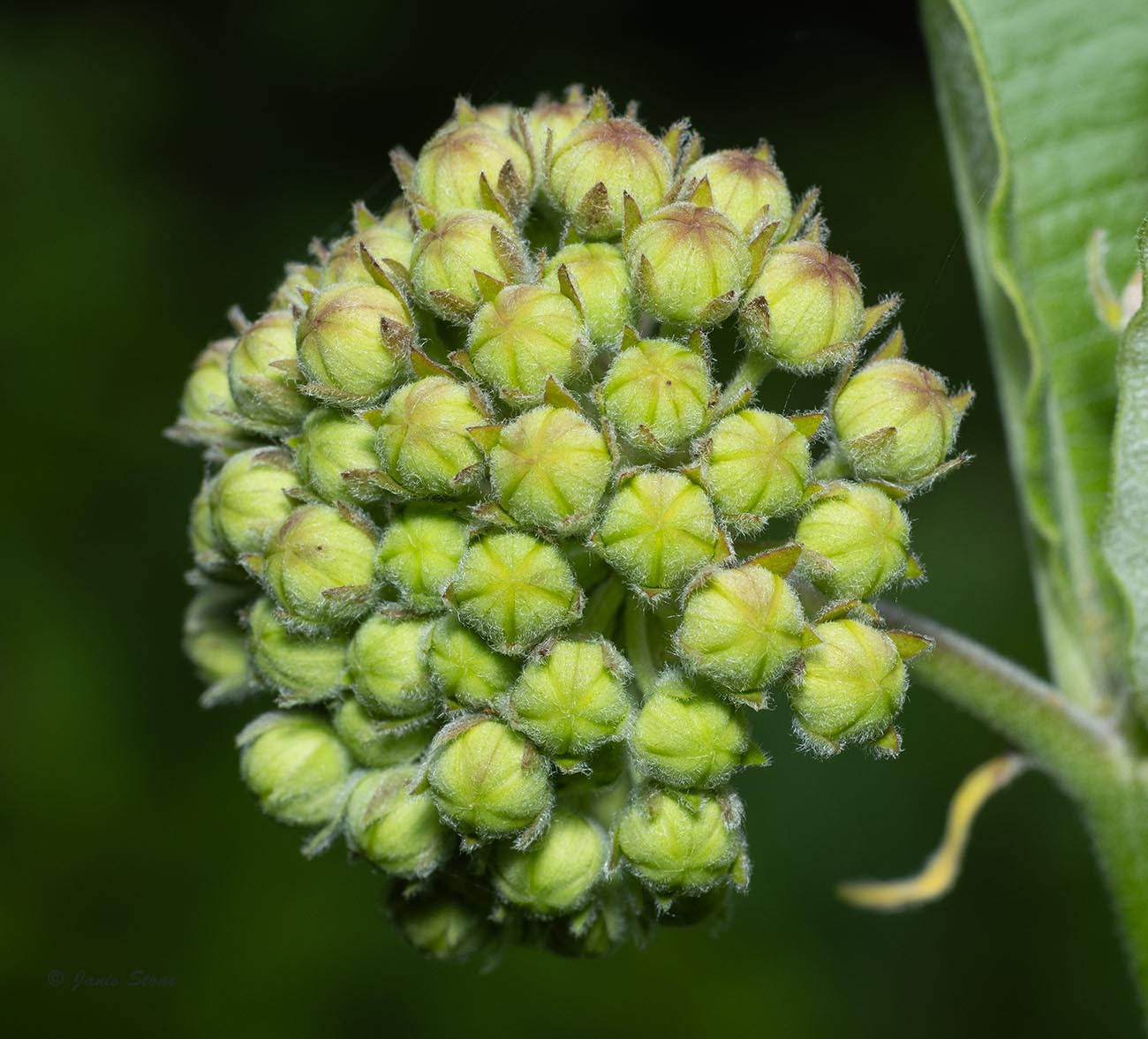
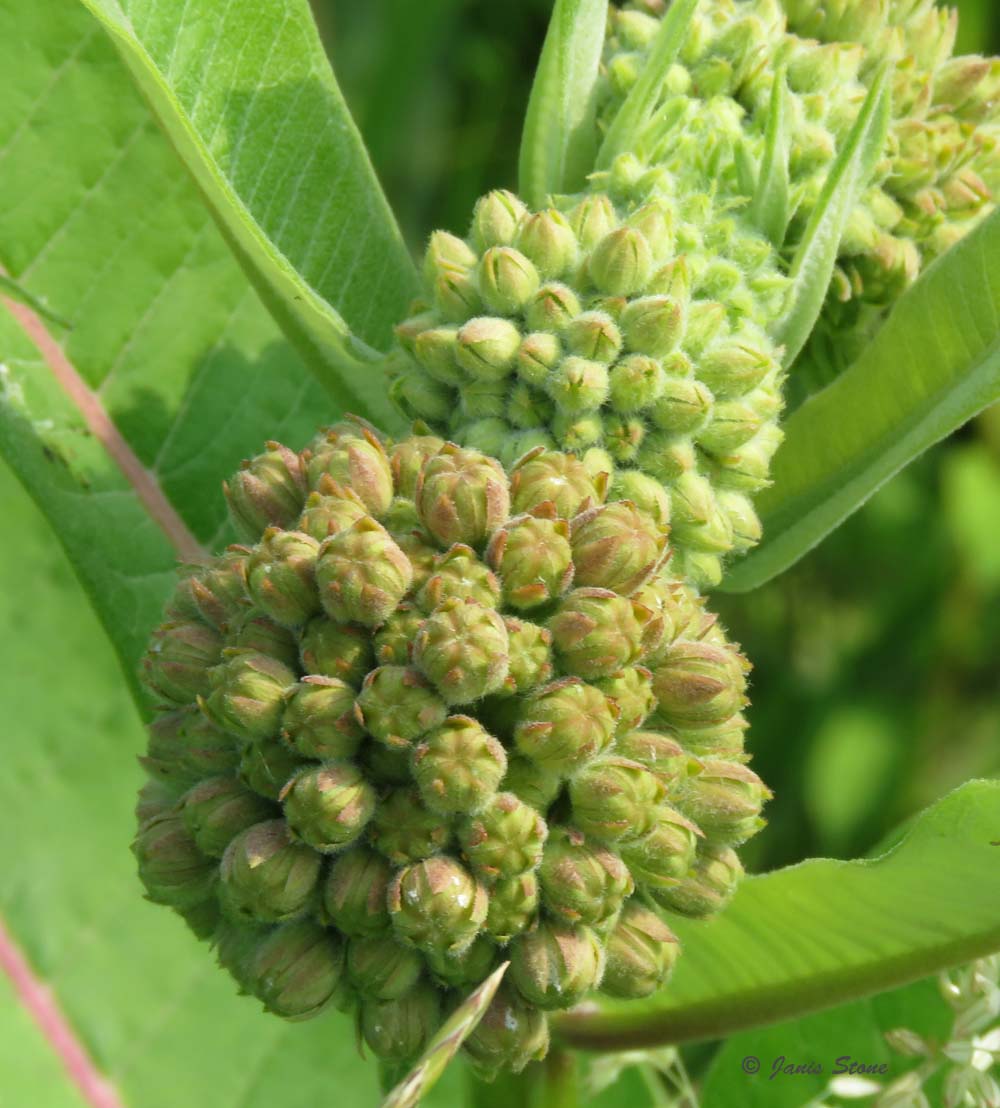
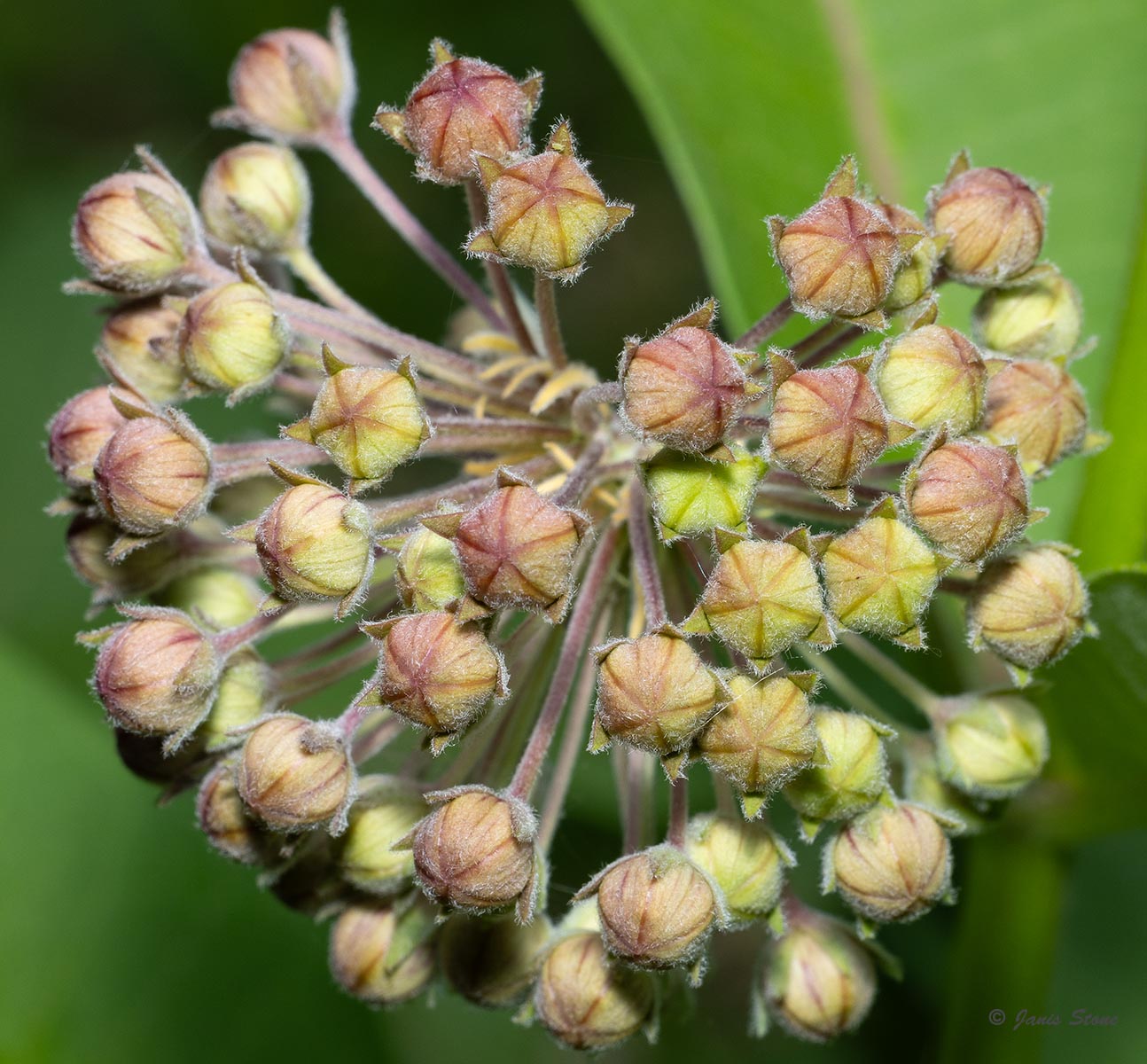
Asclepias syriaca
Common Milkweed
[ click on any image below to see larger version ]
Family:
Apocynaceae
(Dogbane family)
Mid-Atlantic bloom time:
June - August
Mid-Atlantic fruit ripe:
July - September
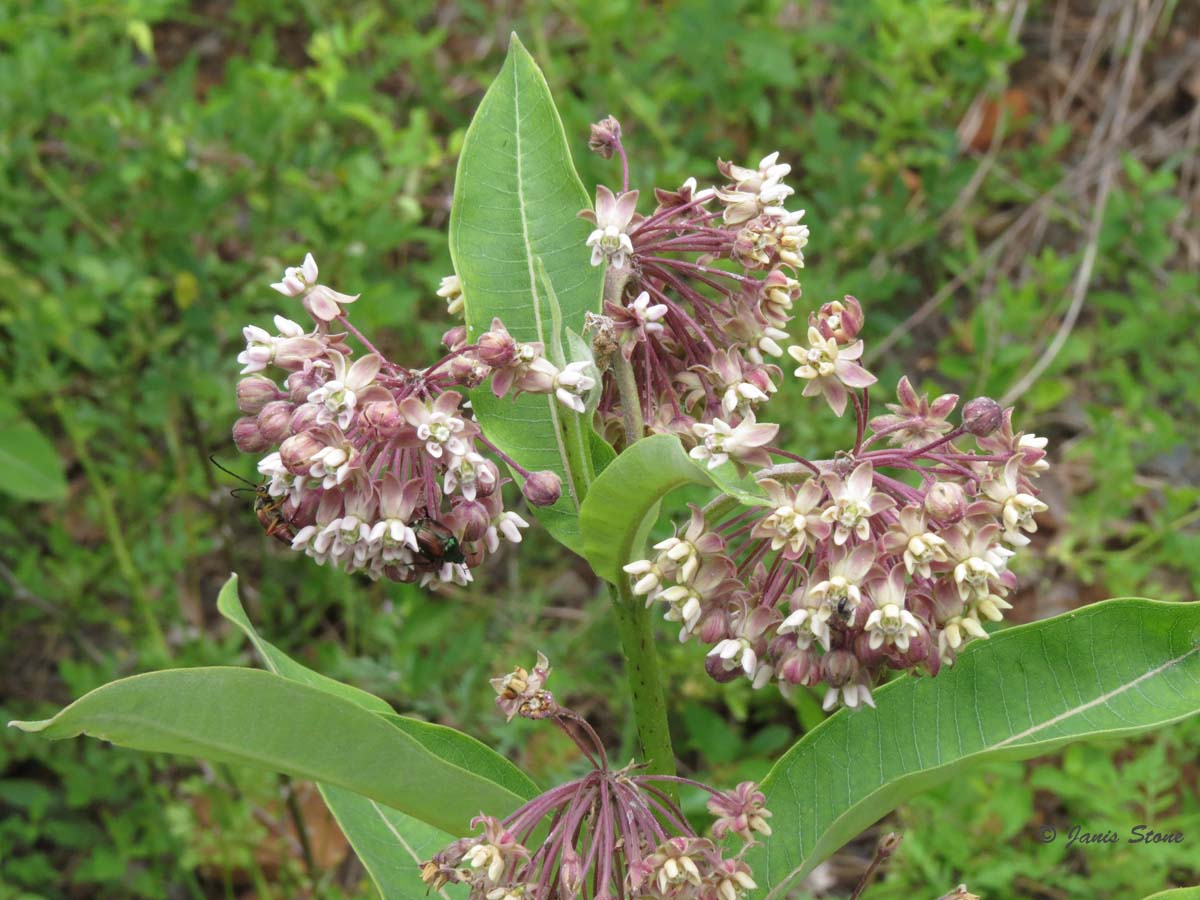
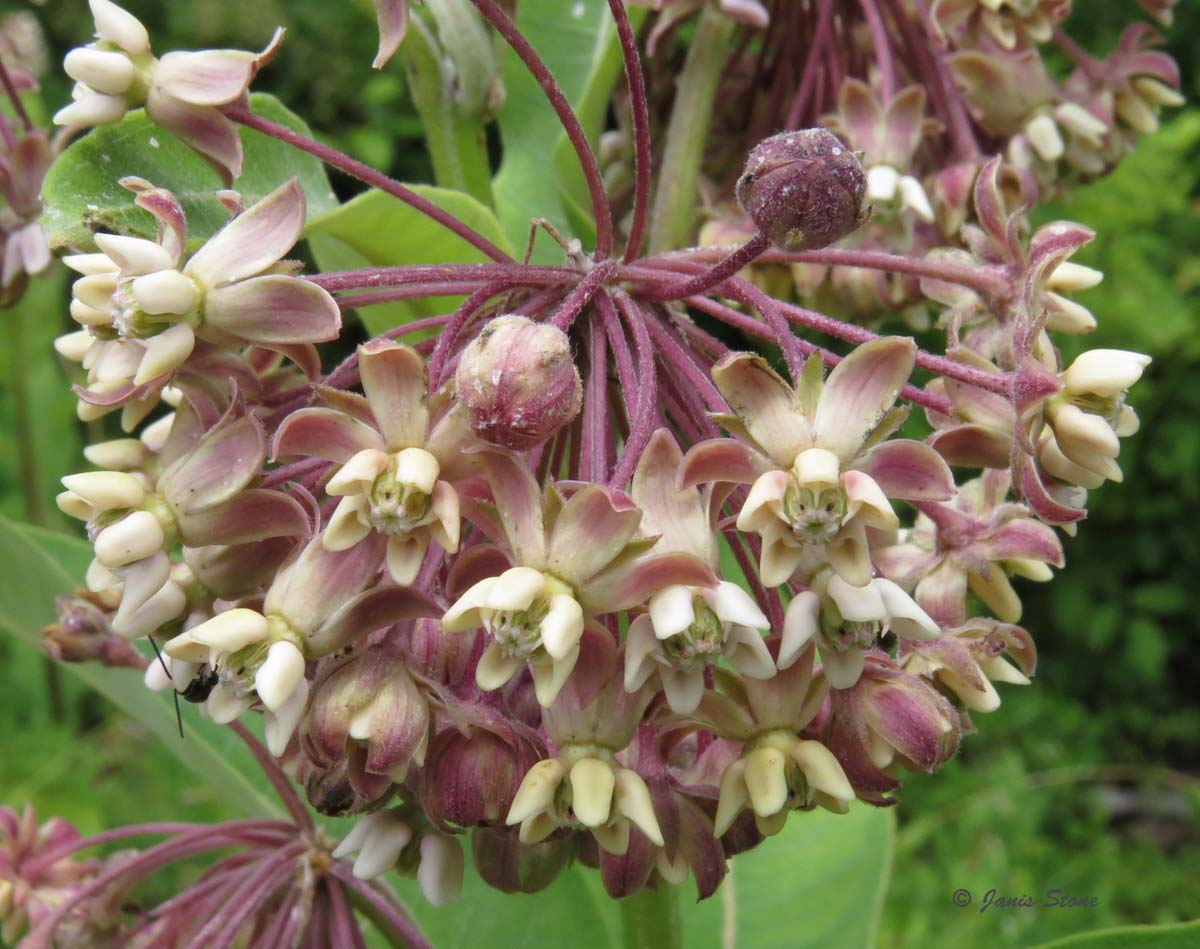
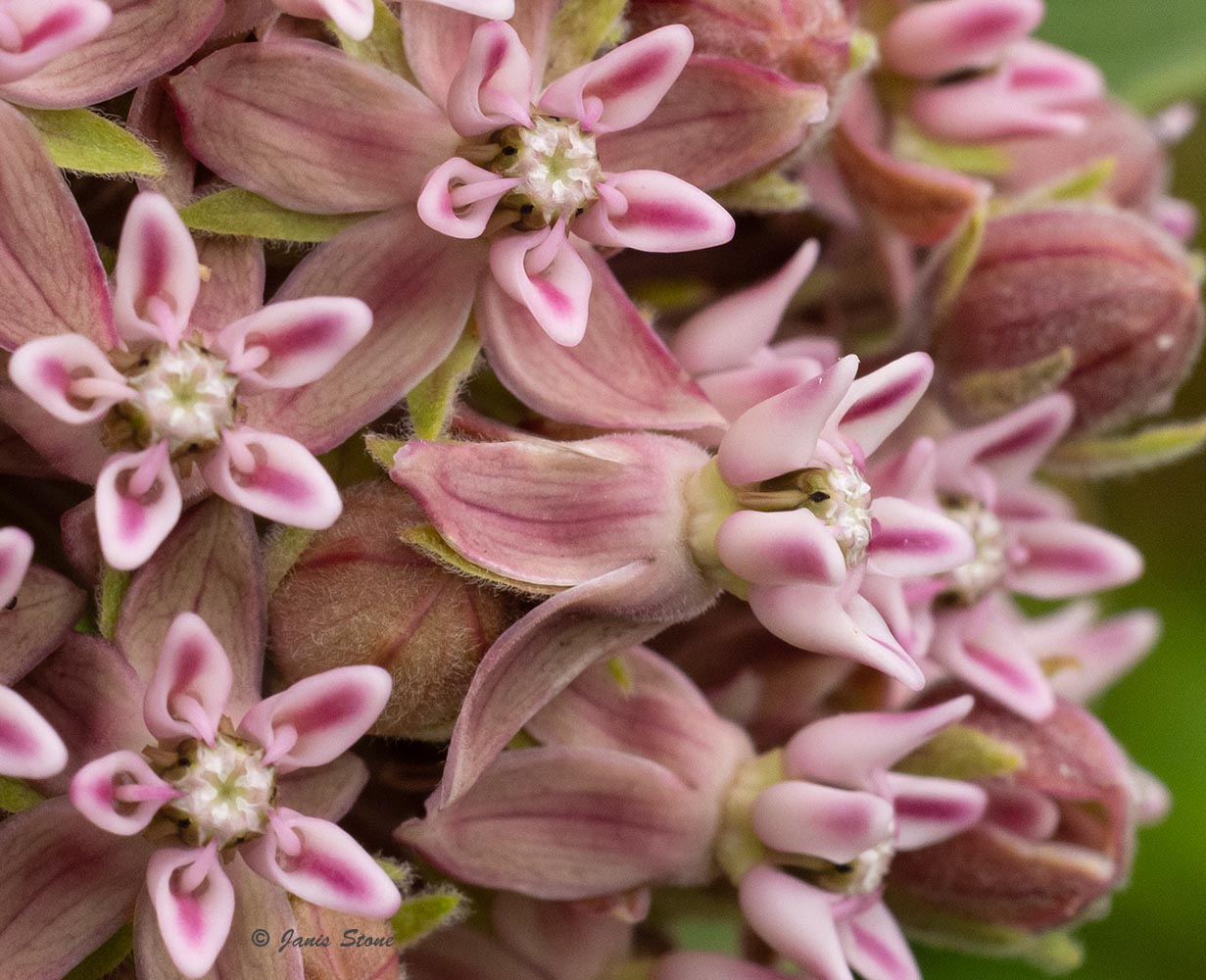
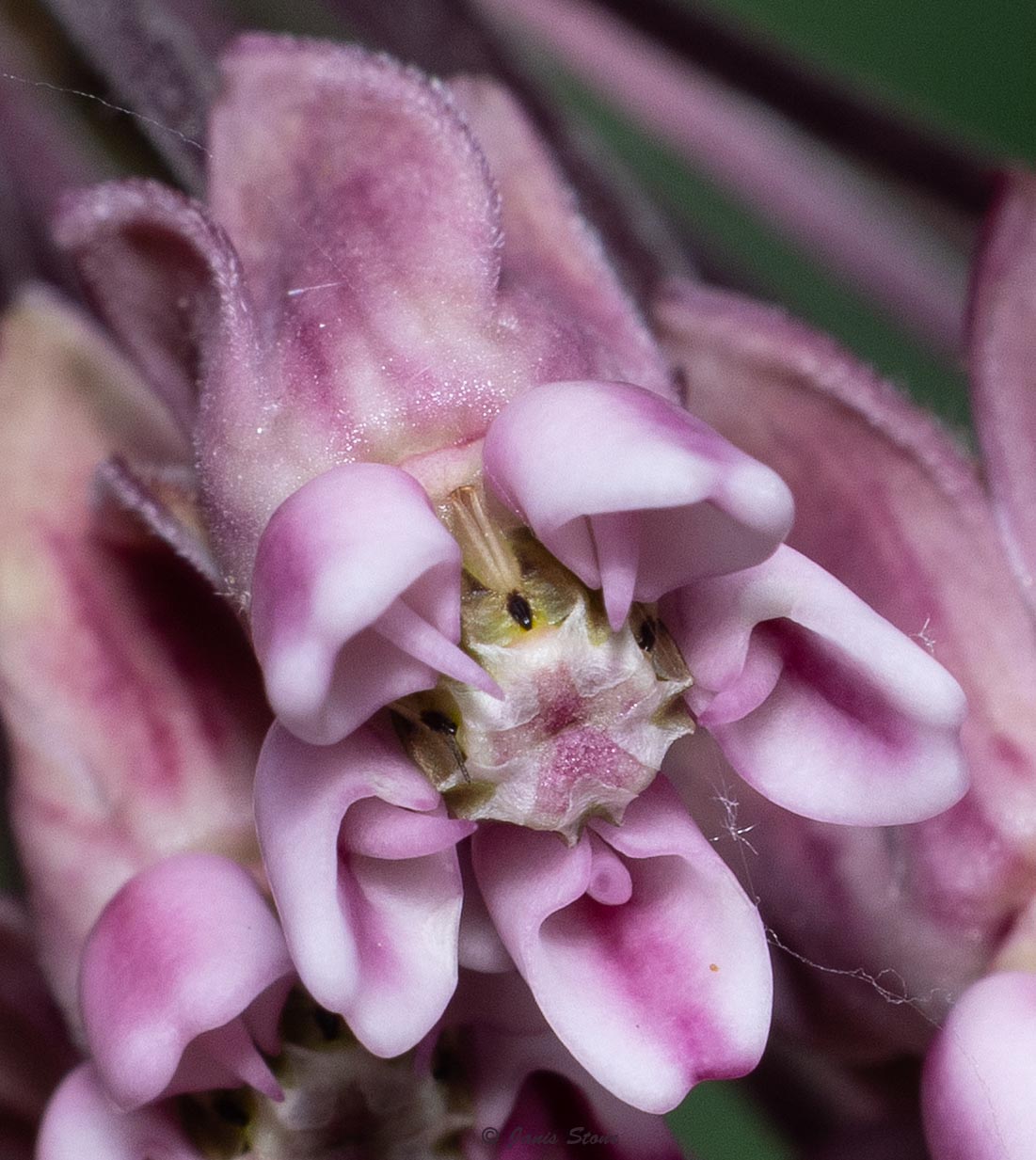
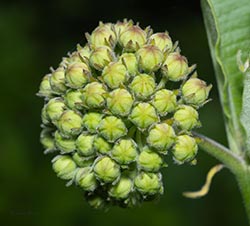
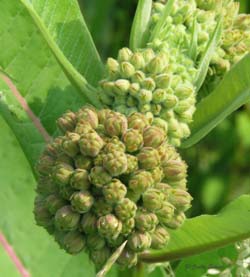
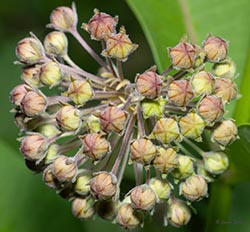
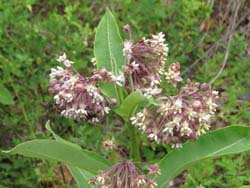
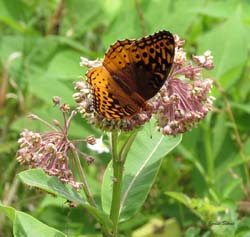
Common Milkweed flowers are greenish-pink to rosy pink to purplish-pink and smell very sweet.
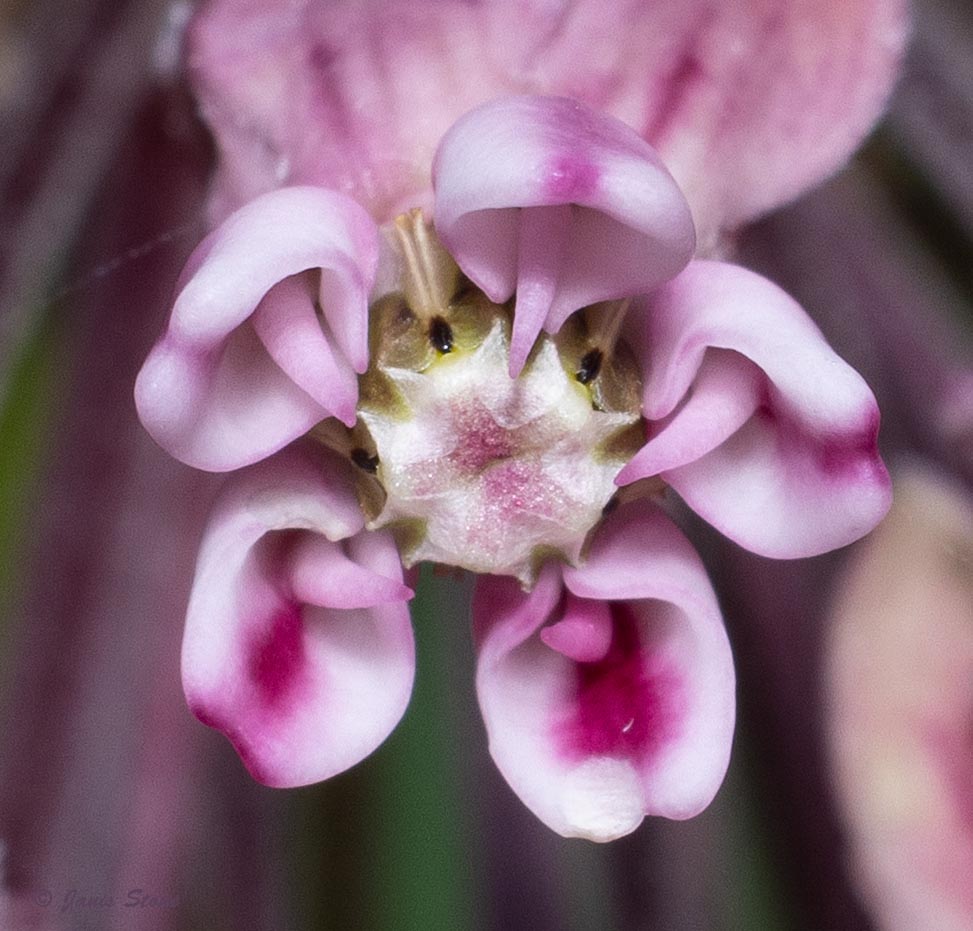
Within each flower, the corolla contains a
gynostegium
in the middle,
surrounded by five colored 'hoods' and 'horns' of about equal length, sitting above the gynostegium, with a
pollinium
emerging from a gynostegium slit between each hood.
Below the corolla are five strongly reflexed colored petals.
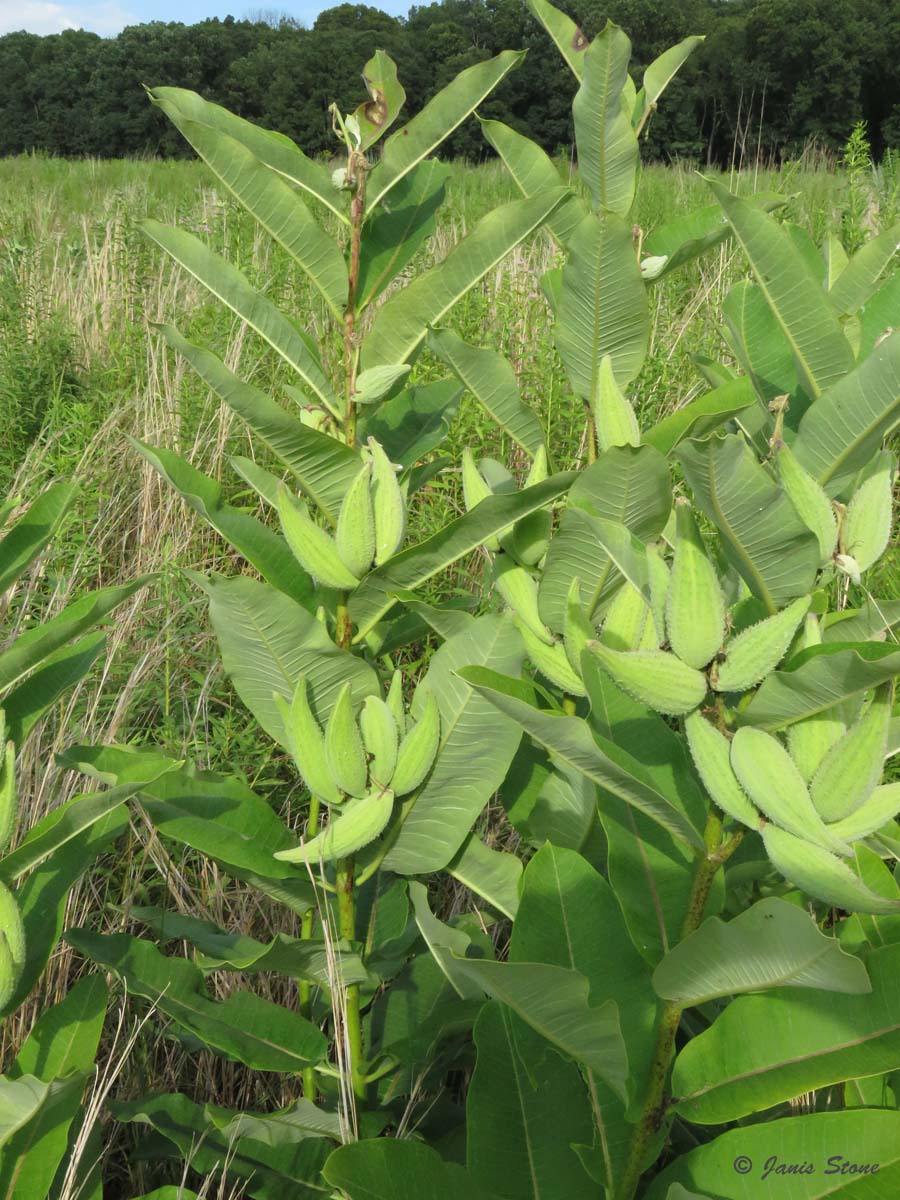
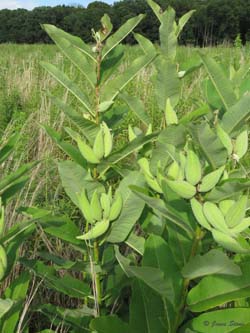
The mature fruit pods are covered in little finger-like projections.
The genus name 'Asclepias' refers to the Greek god of medicine Asklepios.
The species name 'syriaca' means 'of Syria', referring to Linnaeus's mistaken belief it was from Syria.
Common Milkweed grows readily from seed and spreads quickly by deep rhizomes.
It can be weedy and difficult to remove once established, so
care should be used to plant it only in places where this spreading habit can be tolerated.
In addition to its historical use as a wart remover, an interesting note from a 2014
USDA Forest Service webpage1 says:
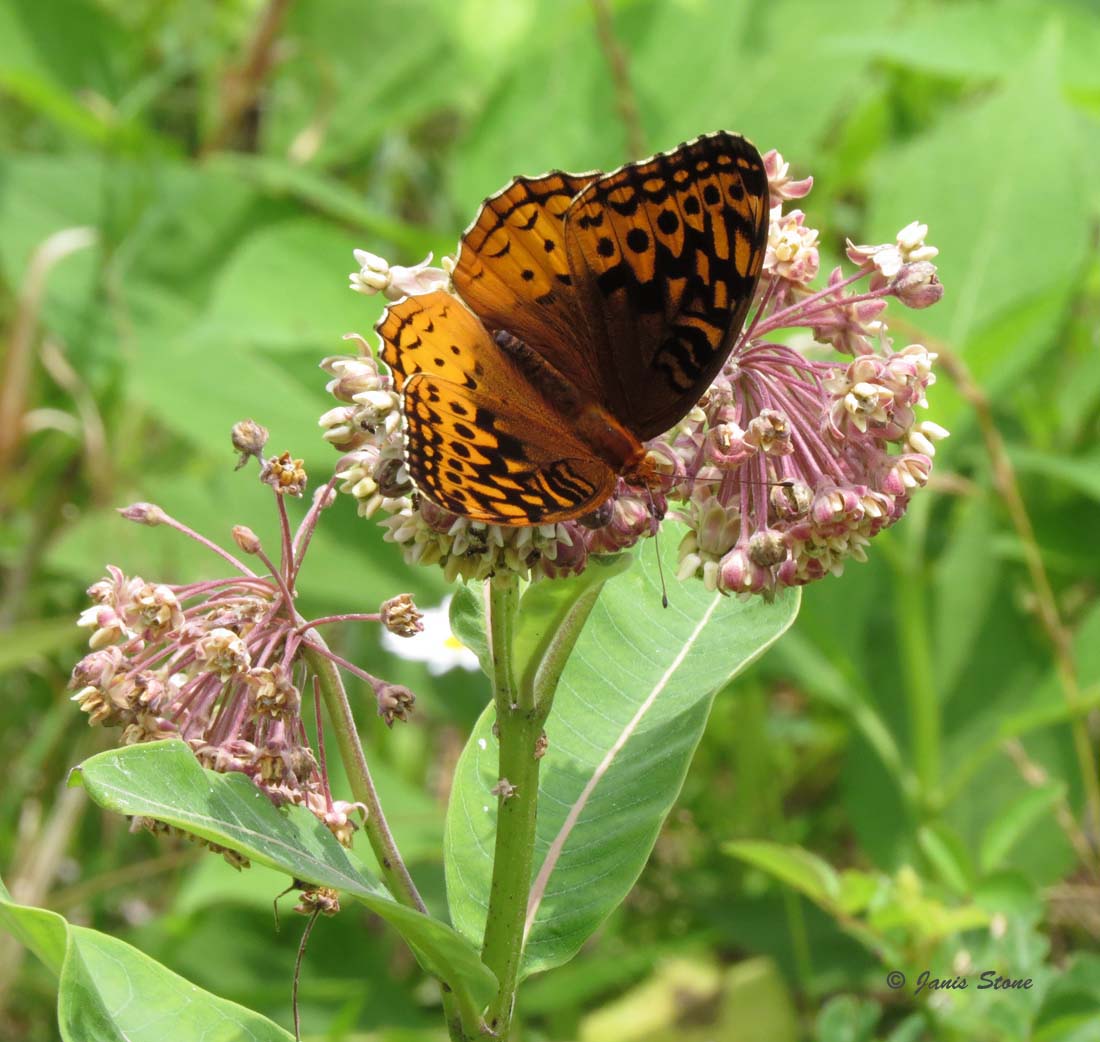
"Milkweeds contain various levels of cardiac glycoside compounds which render the plants toxic to most insects and animals.
For some insects, the cardiac glycosides become a defense.
They can store them in their tissue which renders them inedible or toxic to other animals.
Monarch butterflies use this defense and birds leave them and the caterpillars alone.
What the birds do not know is that northern monarchs feeding on common milkweed accumulate
relatively little of the toxic compounds and probably would be edible.
The more southern butterflies accumulate large amounts of the compounds from other milkweed species and are in fact toxic."
26 June 2014
Bull Run Mountains Natural Area Preserve, Landmark, VA
|
8 June 2026
Great Falls National Park, Great Falls, VA
(emerging flowers)
|
1 June 2019
Manassas National Battlefield Park, Manassas, VA
(emerging flowers)
|
8 June 2026
Great Falls National Park, Great Falls, VA
(emerging flowers)
|
26 June 2014
Bull Run Mountains Natural Area Preserve, Landmark, VA
|
26 June 2014
Bull Run Mountains Natural Area Preserve, Landmark, VA
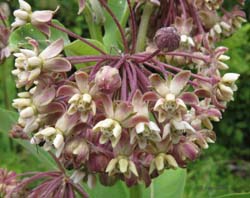
|
16 June 2023
Manassas National Battlefield Park, Manassas, VA
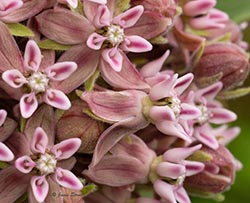
|
8 June 2026
Great Falls National Park, Great Falls, VA
(central gynostegium, pollinia, and surrounding 'hoods' and 'horns')
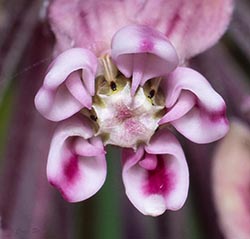
|
8 June 2026
Great Falls National Park, Great Falls, VA
(central gynostegium, pollinia, and surrounding 'hoods' and 'horns')
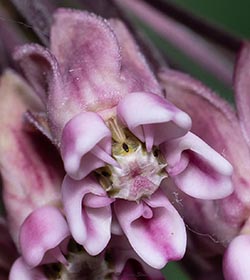
|
14 July 2019
Oxbow Farm, Front Royal, VA
(ripening seed pods)
|
26 June 2014
Bull Run Mountains Natural Area Preserve, Landmark, VA
(with Great Spangled Fritillary)
|
|
References
1:
US Forest Service,
Plant of the Week: Common Milkweed (Asclepias syriaca).
>> return to list of flora