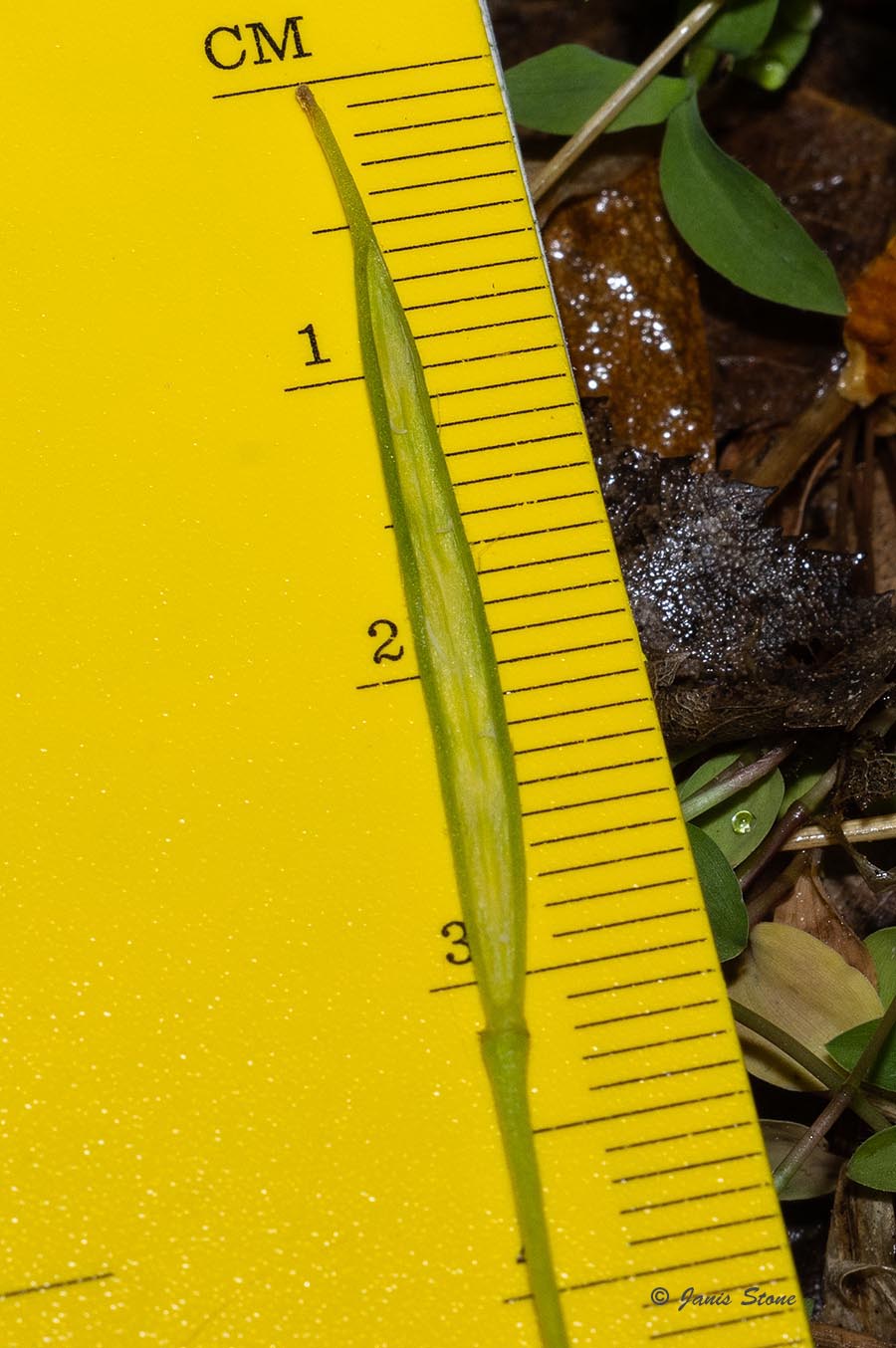
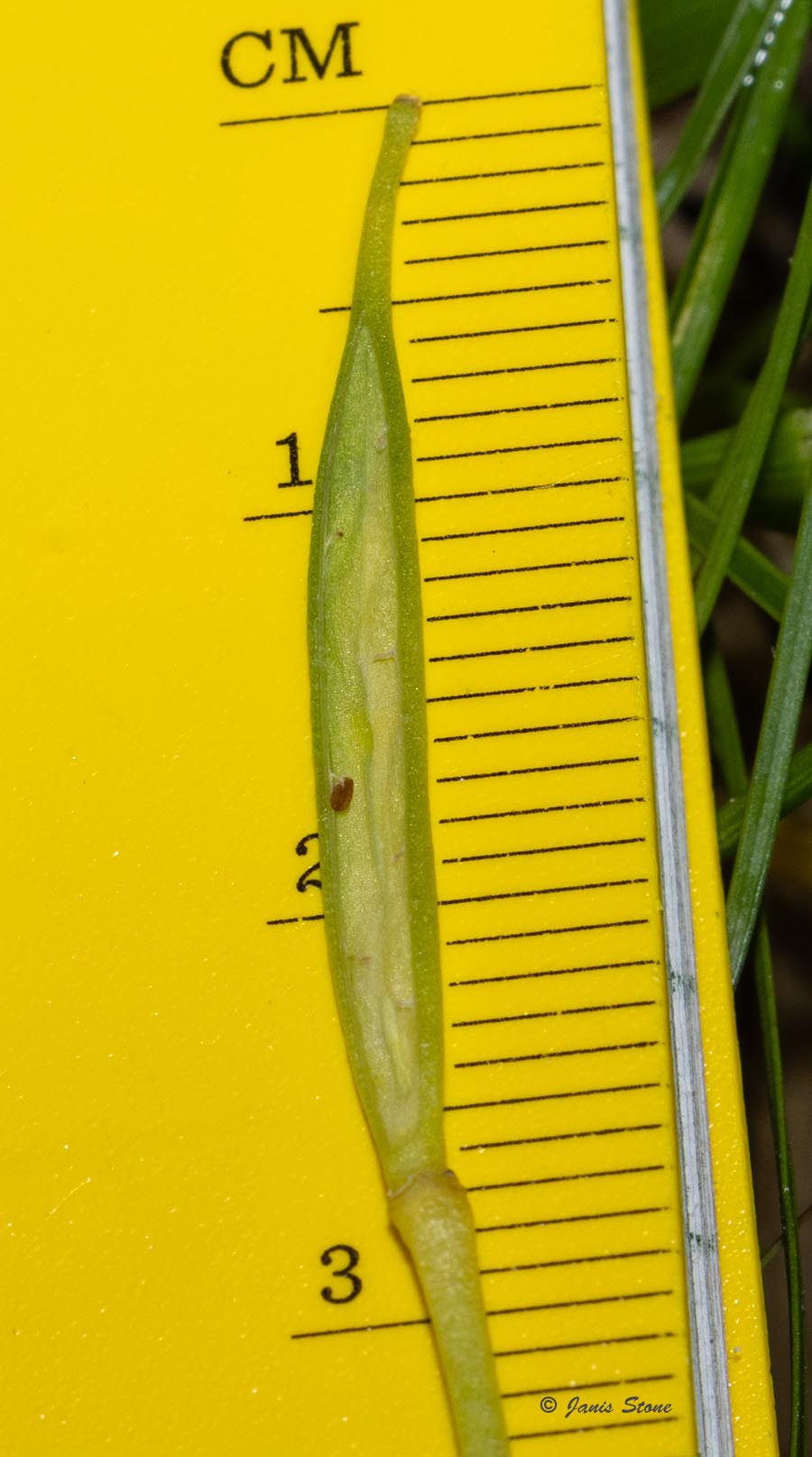
The identification characters most often used to separate the two species are:
|
feature
|
C. bulbosa
|
C. douglassii
|
|
rhizomes
|
short, erect or horizontal, barely subterranean, stout, knotty or tuberous, white
|
sometimes surficial and becoming green
|
|
stems
|
15–60 cm,erect, simple or with a few upper branches, glabrous, or with hairs < 0.1 mm long
|
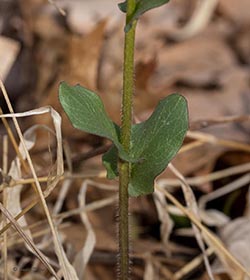
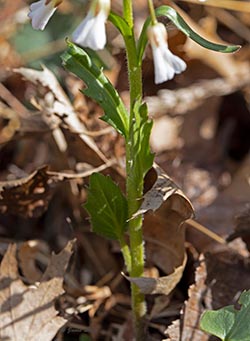
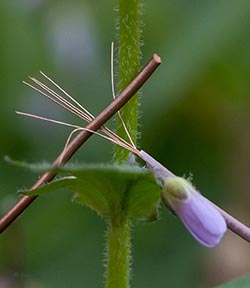
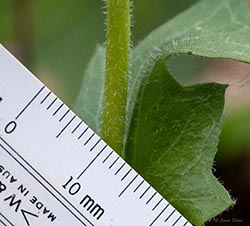
10–50 cm, erect, pubescent (with hairs (0.2–) 0.3–0.6 (–0.8) mm long), with the lower portion cinereous (ash-colored)
|
|
basal leaves
|
blades 2.5–8 cm, oval or rotund to reniform,
entire or repand,
rarely purplish beneath, deciduous before anthesis
|
to 3 cm, orbicular or nearly so, purplish beneath, especially when in full sun, petiolate
|
|
cauline leaves
|
4–12, scattered, ovate or narrowly oblong to elliptic or lanceolate, serrate or entire and undulate
|
2–5, smaller, ovate to oblong
|
|
petioles
|
to 9 cm on basal leaves, reduced progressively upward to lacking
|
lowermost 2 cauline leaves sometimes petiolate, otherwise petioles lacking
|
|
pedicels
|
to 4 cm, ascending to divergent
|
lowermost pedicels 1.5–4 cm, divaricately ascending
|
|
sepals
|
2.5–5 mm
|
3–6 mm
|
|
petals
|
7–16 mm, white, or rarely, pink
|
7–20 mm, pink to lavender or, rarely, white
|
|
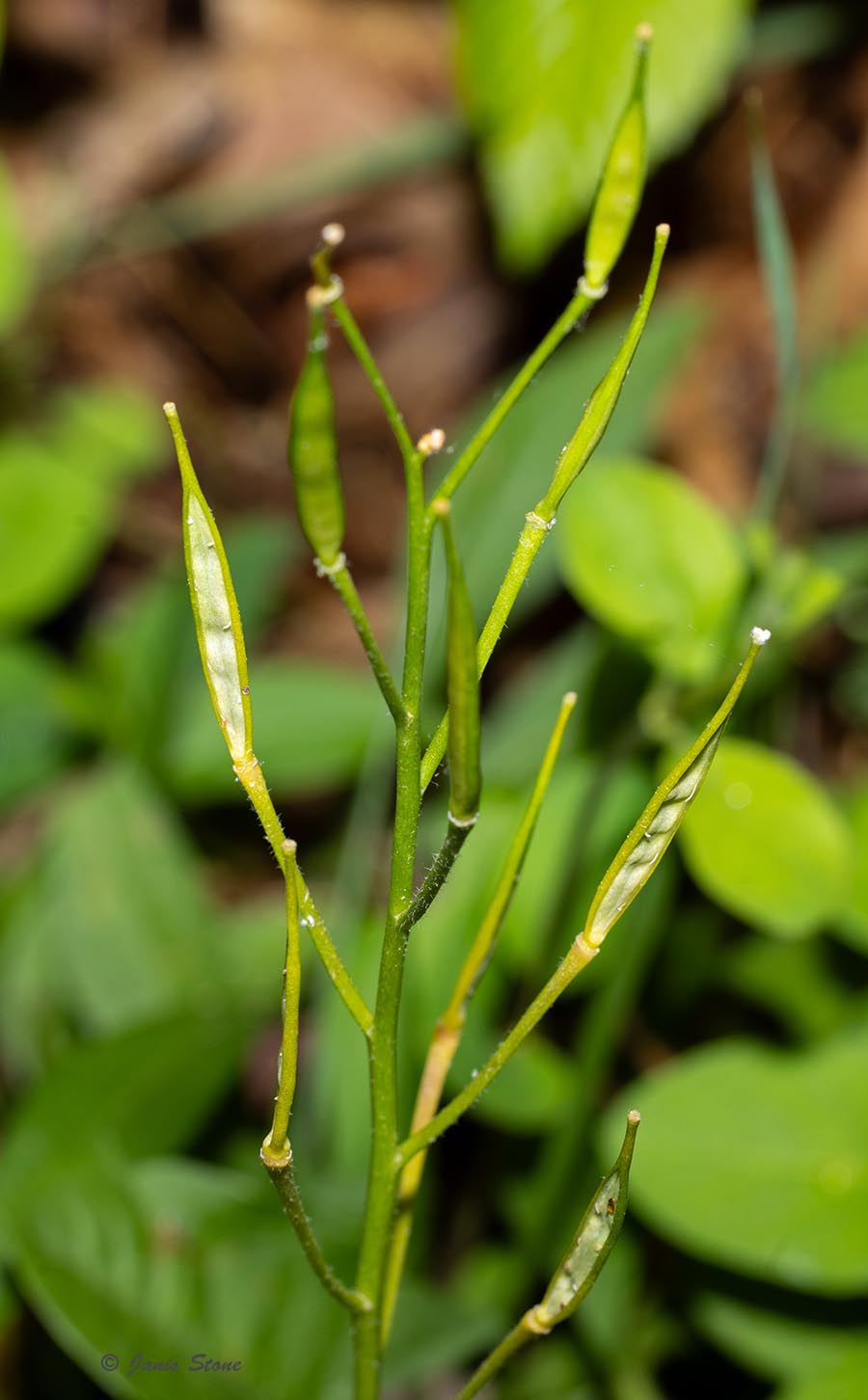
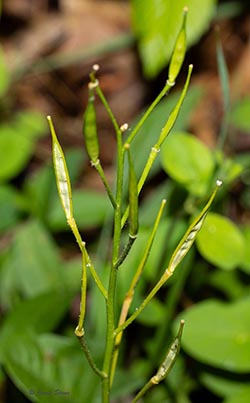
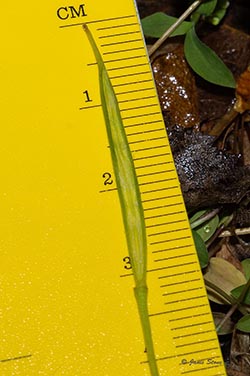
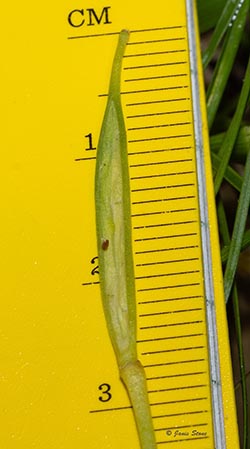
siliques
|
15–30 x to 1.5 mm, plus a beak 2–3 mm
|
10–20 x 1–2 mm, plus a beak 2–4 mm
|
|
seeds
|
to 2.5 mm, dark brown
|
to 1.5 mm, dark brown
|
|
bloom/fruit
|
Mar–May; Apr–May
|
Mar–Apr; Apr–May
|
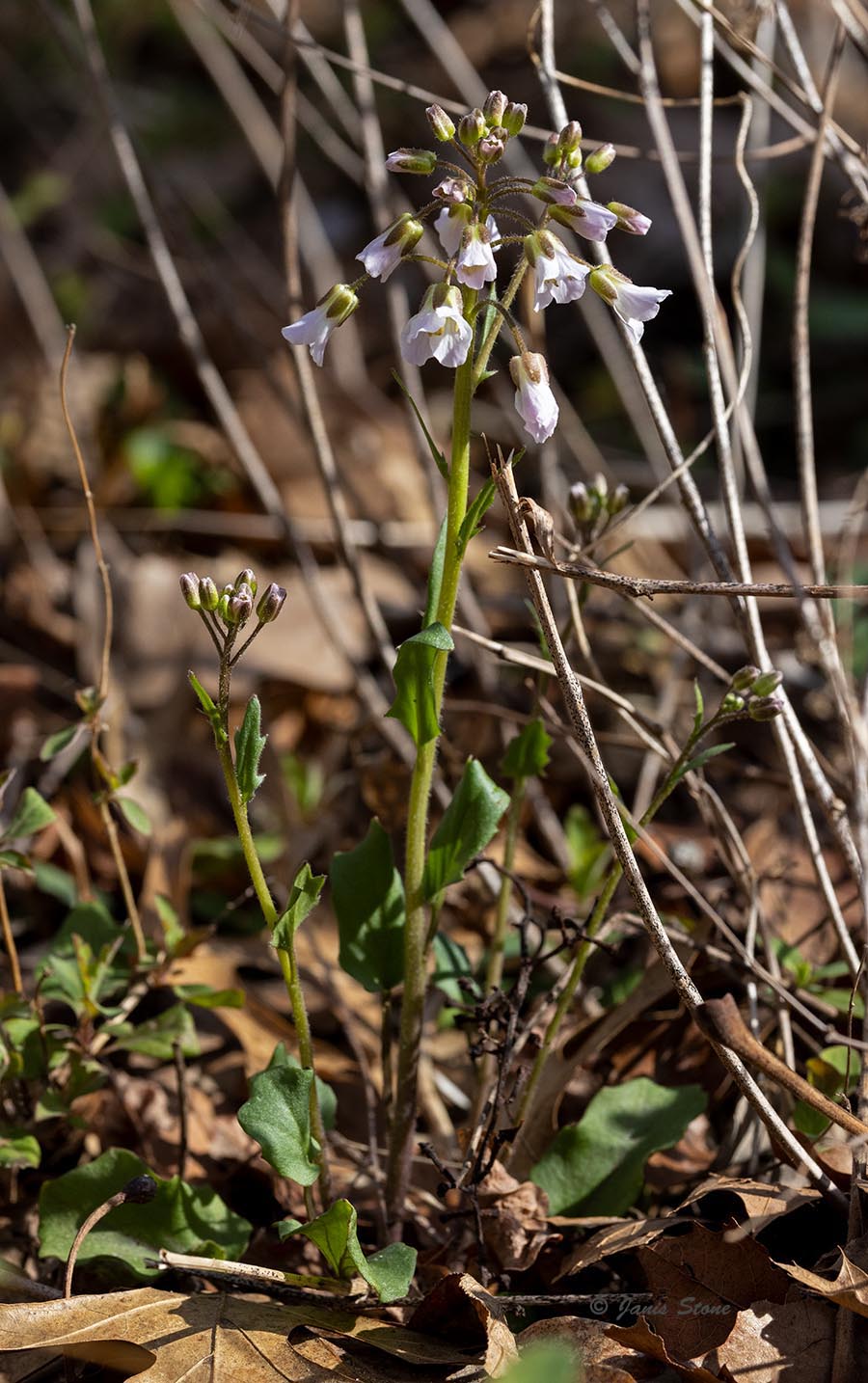
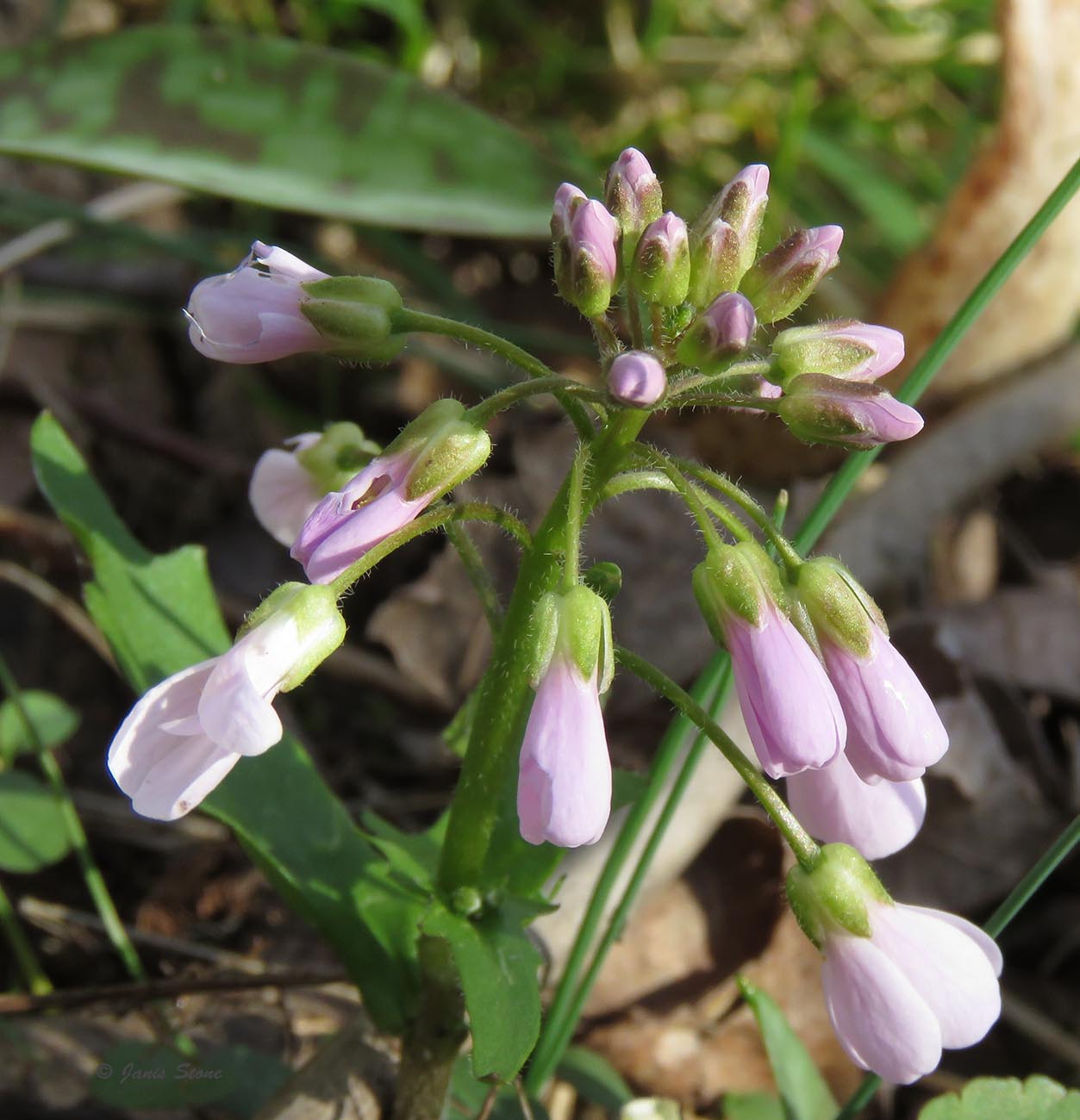
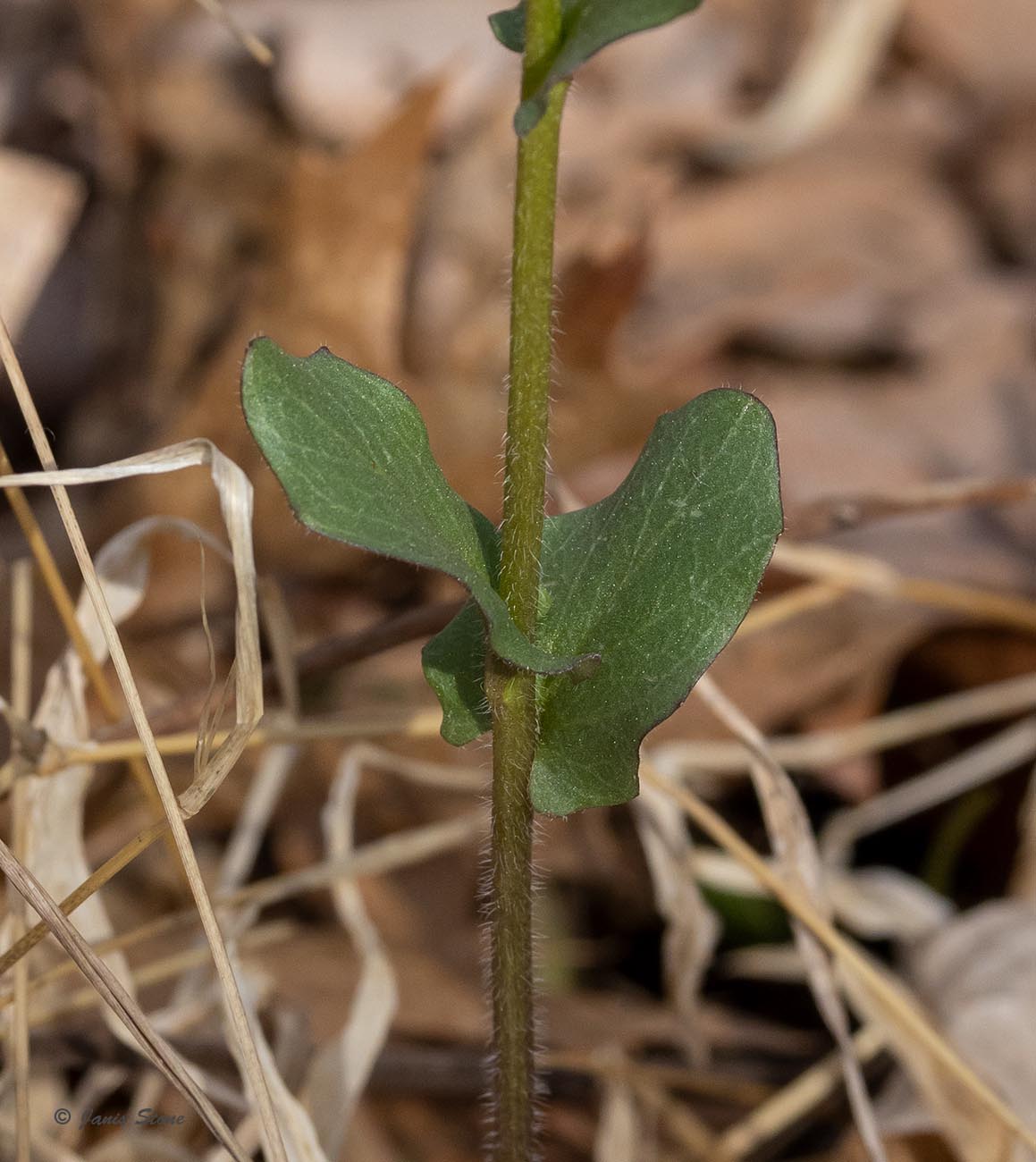
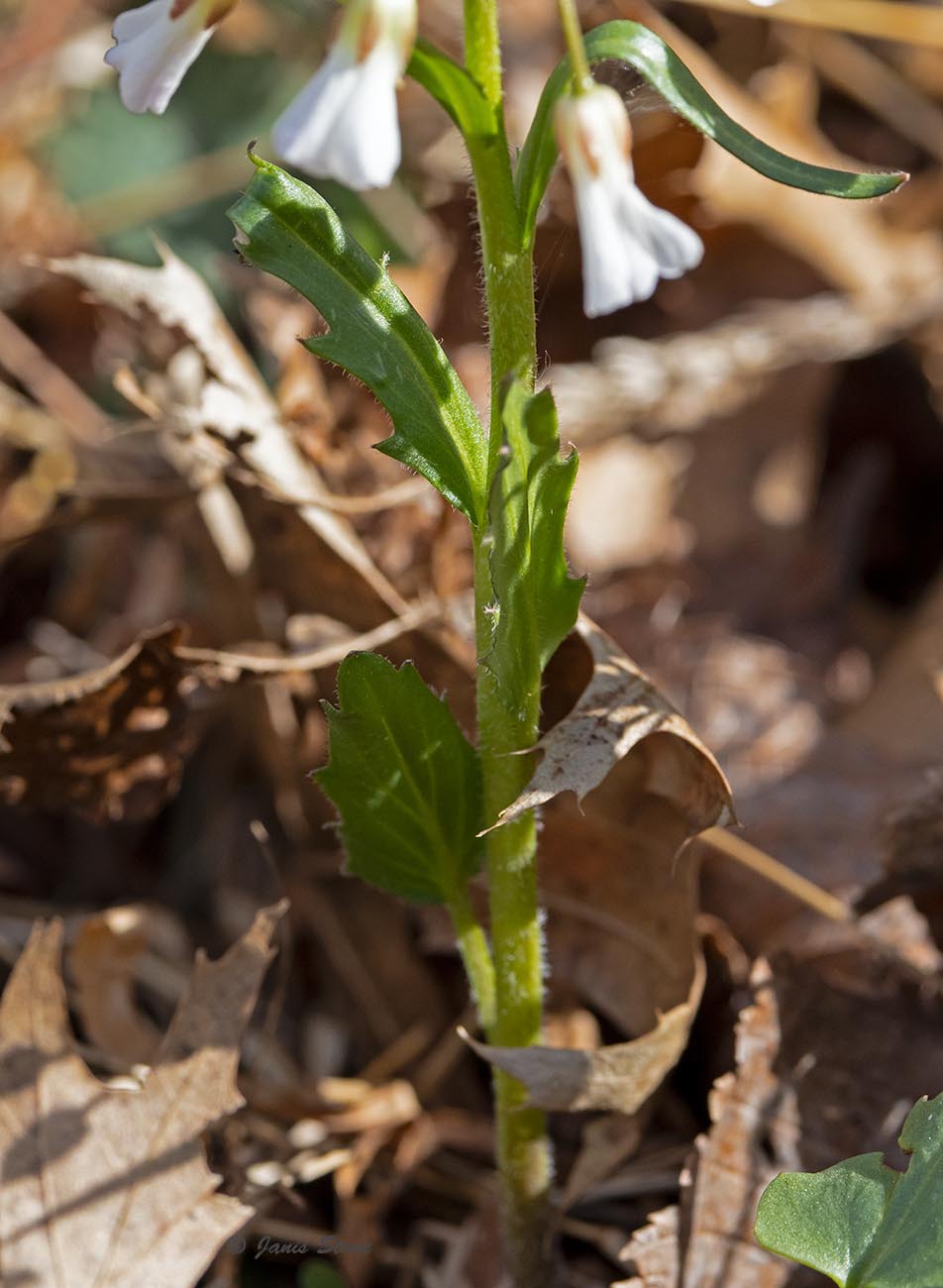
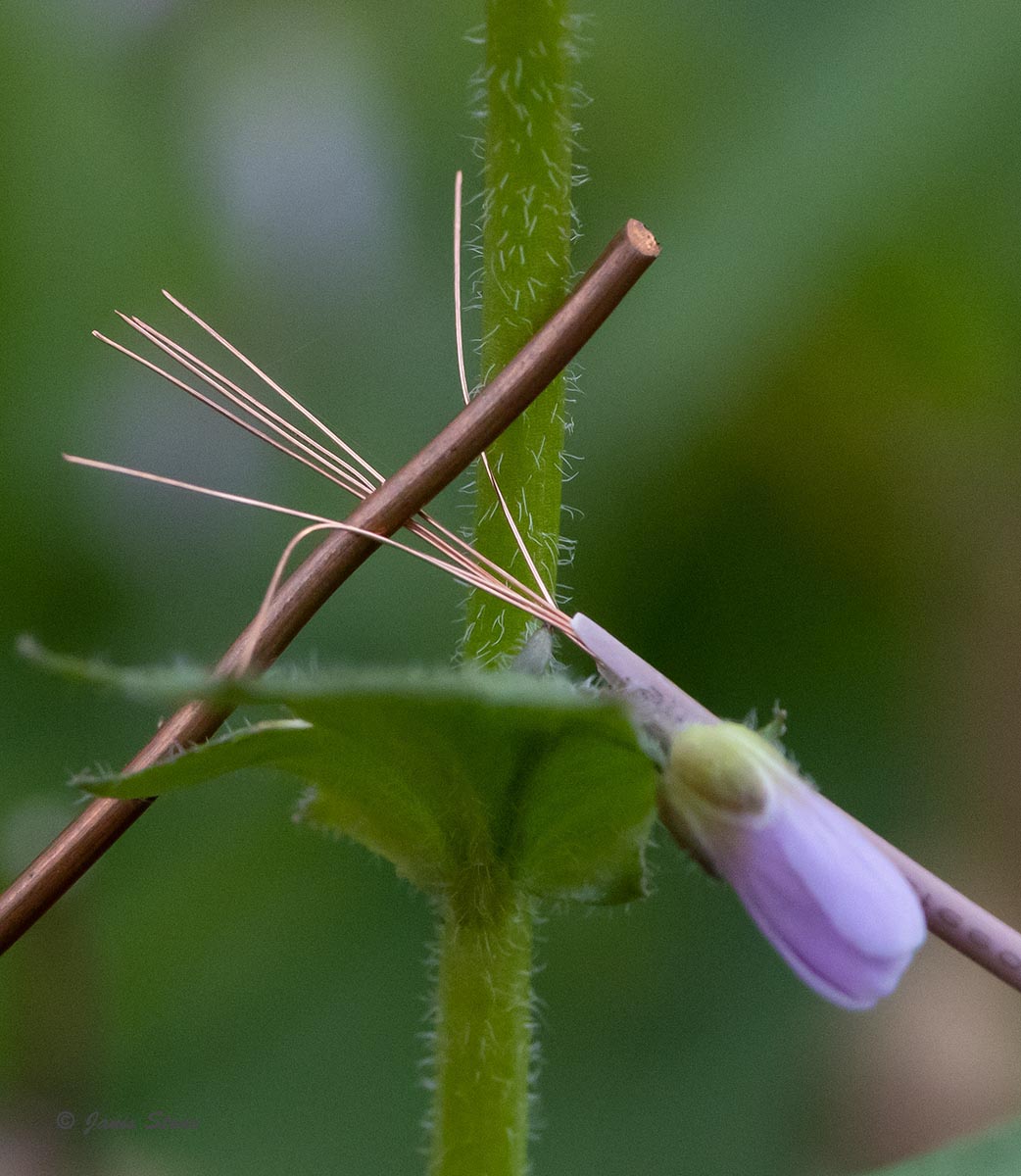
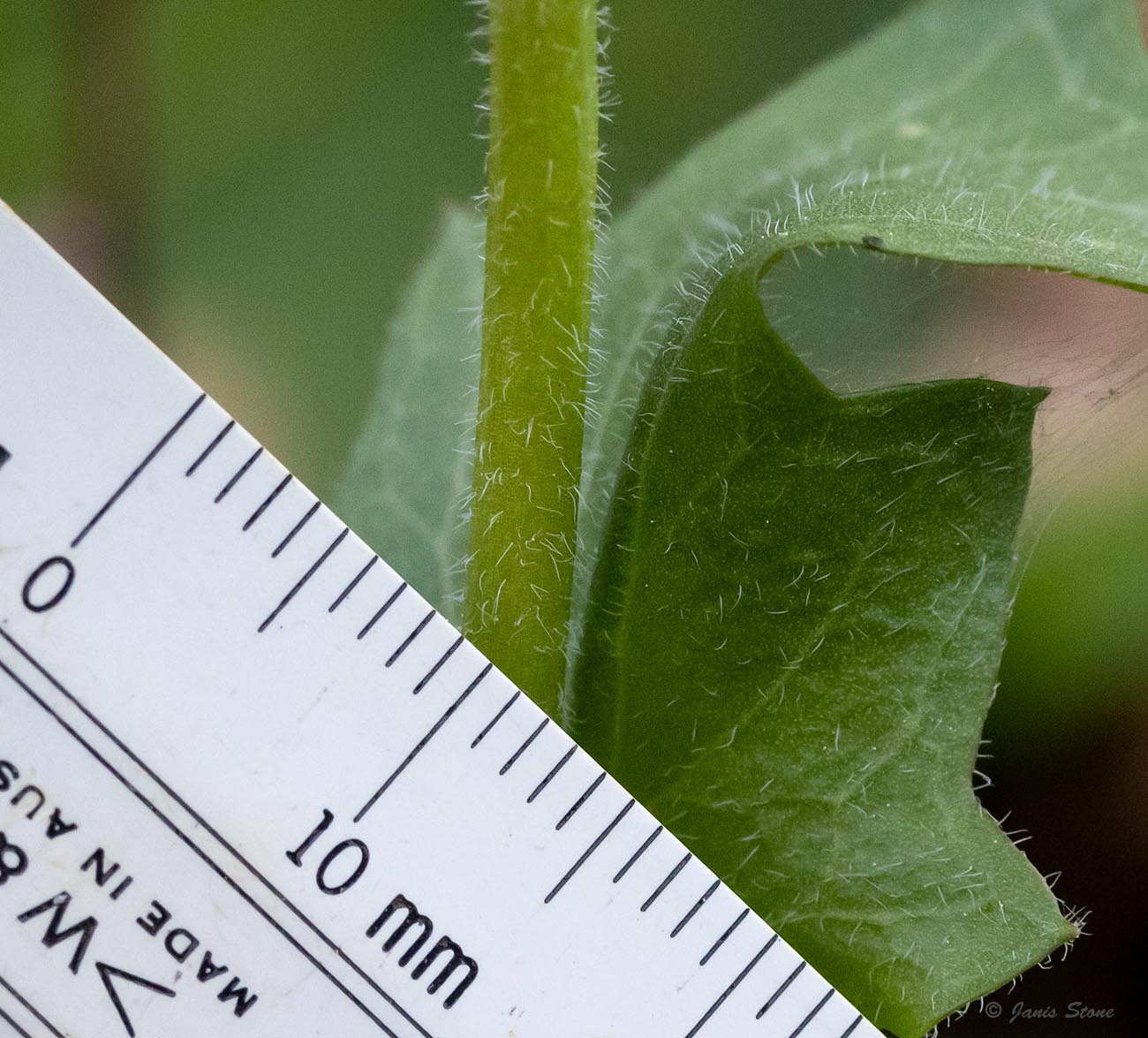
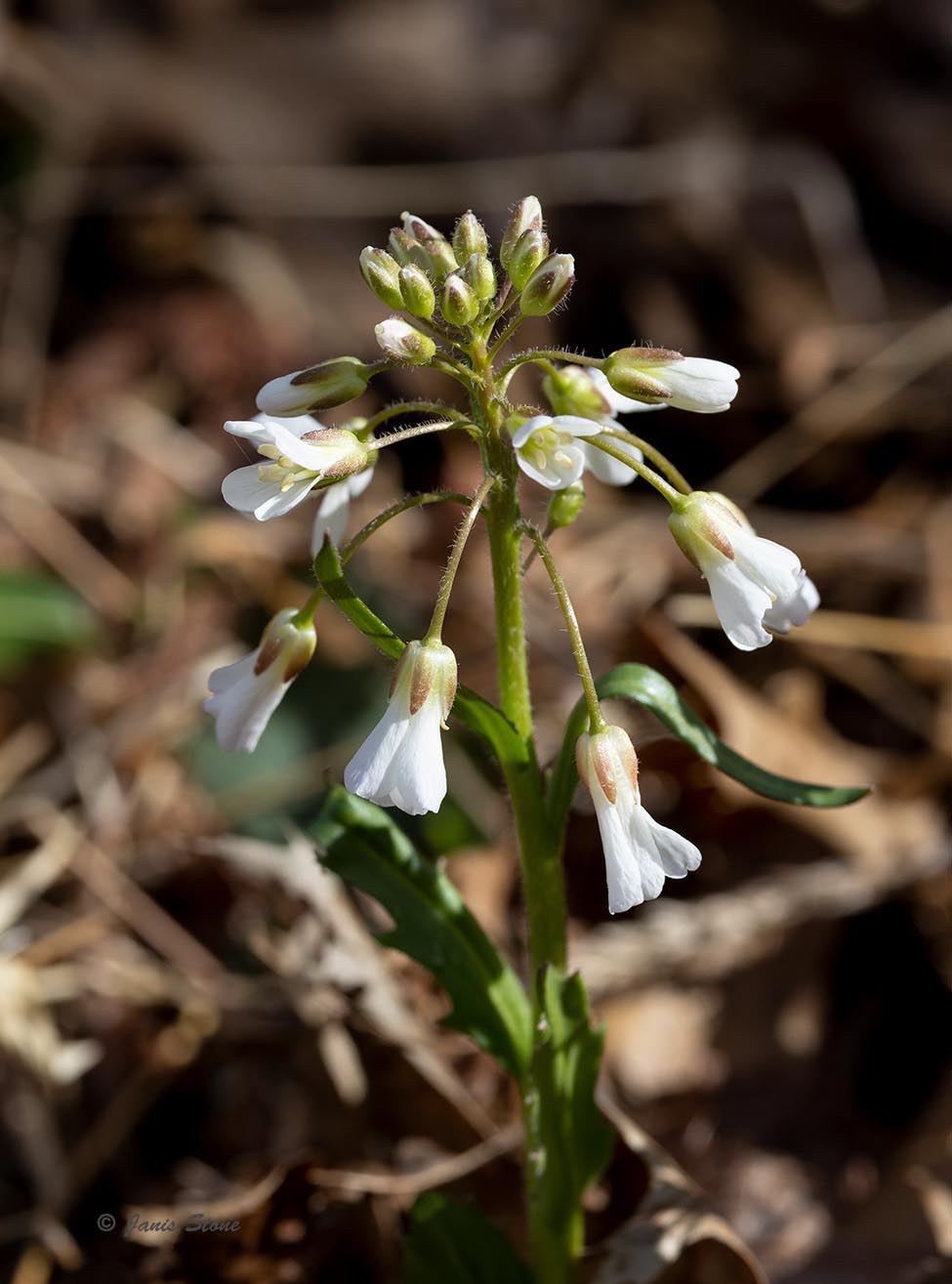
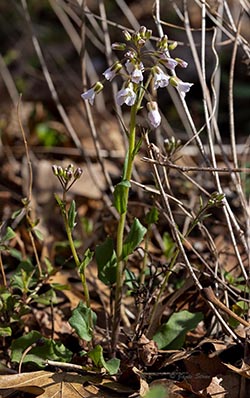
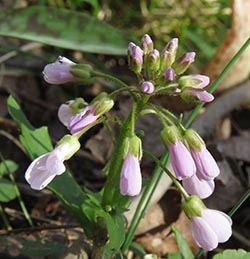
The specimens shown here represent my best guess as to them being Purple Cress (C. douglassii), because their:
- upper stems are pubescent
- sepals are pubescent
- near-basal leaves are flat
- flowers are pink or purple, not mostly white
20 March 2022
Great Falls National Park, Great Falls, VA
|
27 March 2022
Great Falls National Park, Great Falls, VA
|
20 March 2022
Great Falls National Park, Great Falls, VA
(note pubescent stem)
|
20 March 2022
Great Falls National Park, Great Falls, VA
(pubescent stem)
|
3 April 2022
Great Falls National Park, Great Falls, VA
(ignore stick, note pubescent stem)
|
3 April 2022
Great Falls National Park, Great Falls, VA
(measuring pubescence on stem)
|
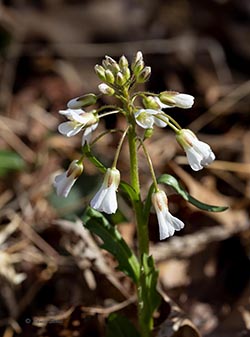
20 March 2022
Great Falls National Park, Great Falls, VA
(white-flowered specimen, but with pubescence; possibly hybrid)
|
1 May 2024
Great Falls National Park, Great Falls, VA
(siliques)
|
1 May 2024
(silique)
Great Falls National Park, Great Falls, VA
|
1 May 2024
Great Falls National Park, Great Falls, VA
(silique)
|
|
|